When planning a Kenya safari, you will quickly encounter three main types of protected areas: national parks (and national reserves), private conservancies, and community conservancies. Here at Adventure Expeditions, we can help you understand the differences and choose not only the experience you want, but also the impact your visit will have.
National Parks and National Reserves
National parks and most national reserves are government-managed protected areas. Kenya Wildlife Service (KWS) oversees the majority of national parks, while some national reserves (such as the Masai Mara National Reserve) fall under county governments.
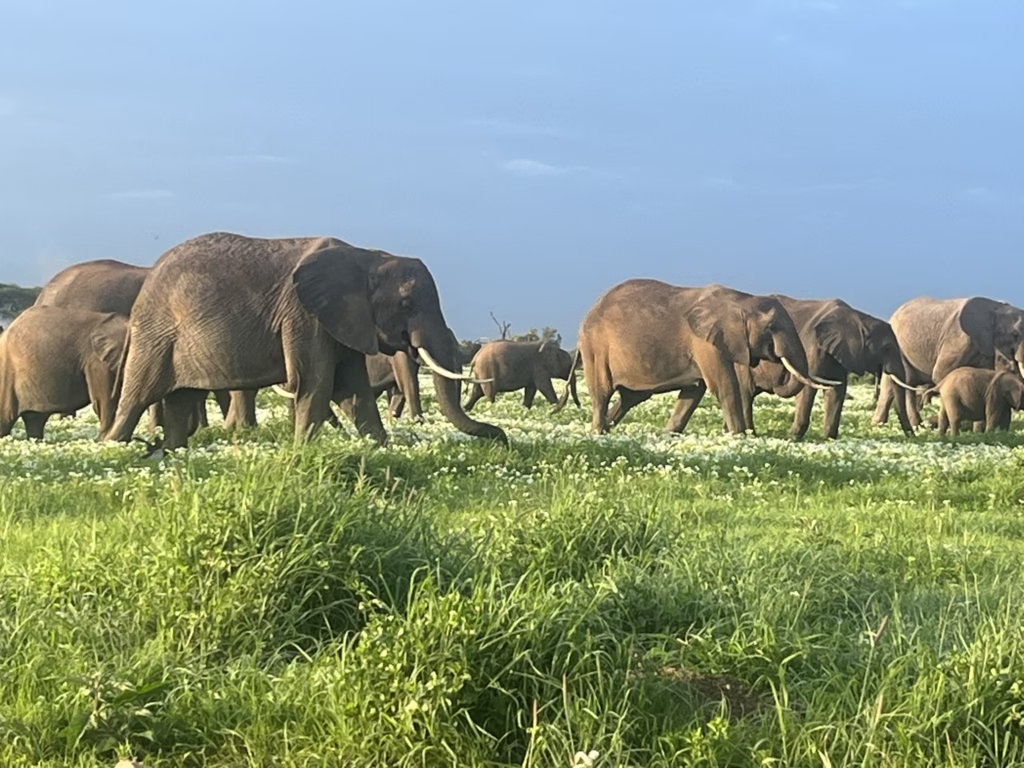
These areas are open to the public. Anyone who pays the daily entry fee can enter, whether staying inside the park or visiting for the day. Rules are relatively strict and standardised: no off-road driving in most places, no night drives, and limited walking. Visitor numbers are not capped, so popular sightings can attract many vehicles, especially in high season.
Where the money goes:
Park and reserve entry fees go to the managing authority, the KWS or the relevant county government. These funds support park management, rangers, infrastructure and broader national conservation programmes. A portion may eventually benefit neighbouring communities through county budgets or revenue-sharing arrangements, but the link is often indirect.
Private Conservancies
Private conservancies are established on privately owned land, often former cattle ranches. The landowner (an individual, family or company) decides to manage the area primarily for wildlife and low-impact tourism. Examples include parts of Laikipia such as Ol Pejeta (run as a not-for-profit) and Mpala Conservancy run for research purposes.
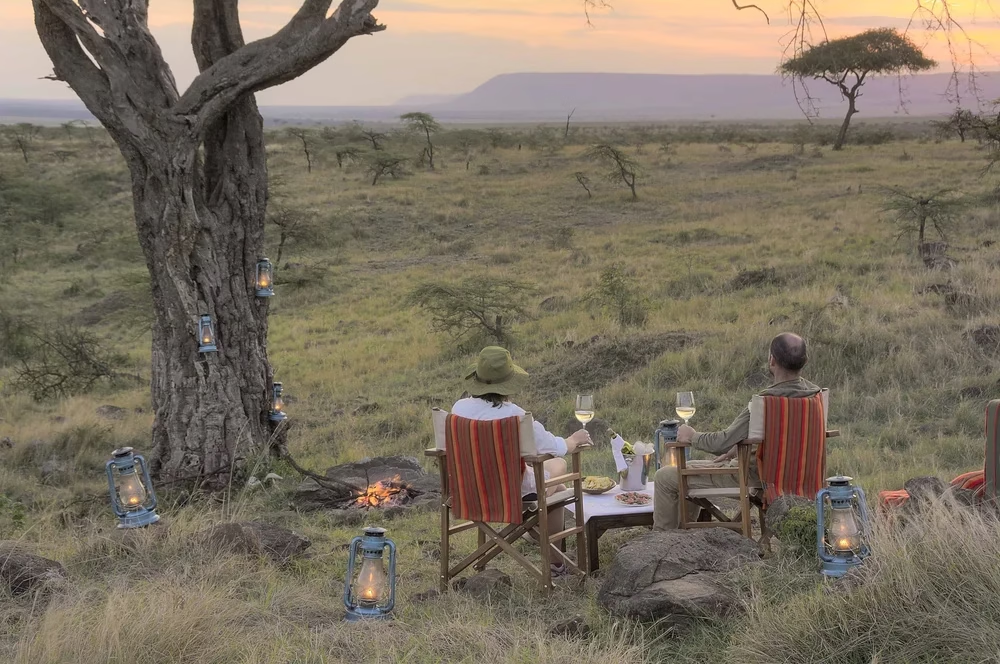
Access is usually restricted to guests staying at the lodges or camps within the conservancy. This keeps vehicle numbers low. Activities that are restricted in national parks, such as night drives, off-road driving and walking safaris, are typically allowed under careful management.
Where the money goes:
Conservancy fees and lodge revenues primarily support the landowner’s conservation operations: ranger salaries, anti-poaching, habitat management and infrastructure. In well-run private conservancies, a significant share is also directed into community programmes, employment and partnerships with neighbouring groups. Where possible, we try to work with properties that have conservation and community interests at heart.
Community Conservancies
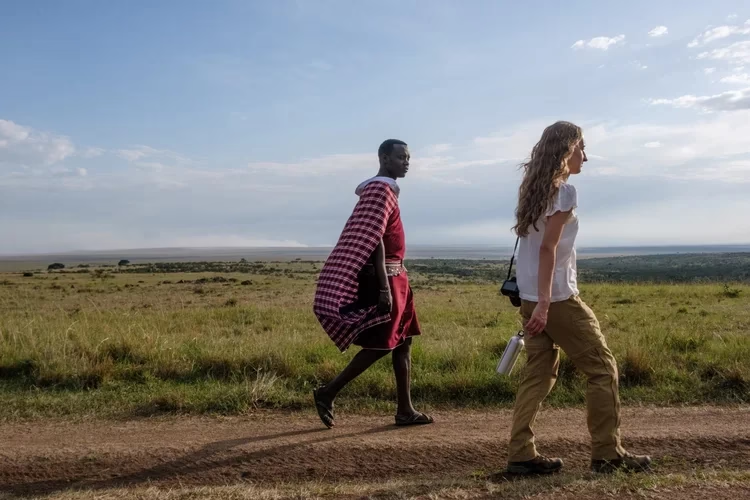
Community conservancies are owned by local communities, usually pastoralist groups such as the Maasai, Samburu, Rendille or Turkana. The community collectively decides to manage land for wildlife alongside traditional livestock grazing. Many of these conservancies, especially in northern Kenya, are supported by organisations such as the Northern Rangelands Trust (NRT).
Like private conservancies, they limit guest numbers and permit more flexible activities (night drives, walks, cultural visits). The key difference is ownership and governance: decisions are made by elected community boards, and benefits are designed to flow back to their communities.
Where the money goes:
This is where the model is most direct. Tourism revenue, through bed-night fees, conservancy fees and lodge leases are paid to the community. This income typically supports:
- Employment (rangers, guides, lodge staff)
- Community projects (schools, water, healthcare, bursaries)
- Conservancy operations (security, grazing management, wildlife monitoring)
In successful community conservancies, wildlife becomes a valuable economic asset rather than a source of conflict. People protect what benefits them so wildlife gets enhanced protection.
Why Stay in a Conservancy?
Staying in a conservancy, whether private or community, usually offers far fewer vehicles and a more exclusive experience, greater activity flexibility including night drives, walking safaris and off-road driving, a clearer line between your payment and on-the-ground conservation or community benefit, and the chance to support models that expand wildlife habitat beyond the boundaries of national parks.
National parks remain vital — they protect core ecosystems and are accessible to a wider range of travellers. Conservancies complement them by creating buffer zones, wildlife corridors and economic incentives for the people who live alongside wildlife.
At Adventure Expeditions, we deliberately include both as some destinations are iconic. We love the classic parks, but we also prioritise stays in well-managed private and community conservancies because the combination delivers better wildlife viewing, richer experiences, and a more meaningful contribution to Kenya’s conservation future. When you choose where to stay, you are also choosing where your money works hardest. A conservancy stay is one of the most effective ways a visitor can support both wildlife and the communities that share the land with it.
Reach out to us for advice on which are the best conservancies and community conservancies that we can include in your next trip to Kenya.







 +254-722-338 514
 +254-702-183 169